

Telehealth solutions for stress and anxiety now go well beyond being stopgaps. Online providers offered considered, even long-term solutions to tackling anxiety through fully bulk-billed access to mental health treatment plans and tele-counselling, mindfulness apps, and medicinal cannabis prescriptions, where appropriate. If you’re weighing up which provider to use or what option to ask about, here’s what you need to know.
Guide to Telehealth for Anxiety in Australia
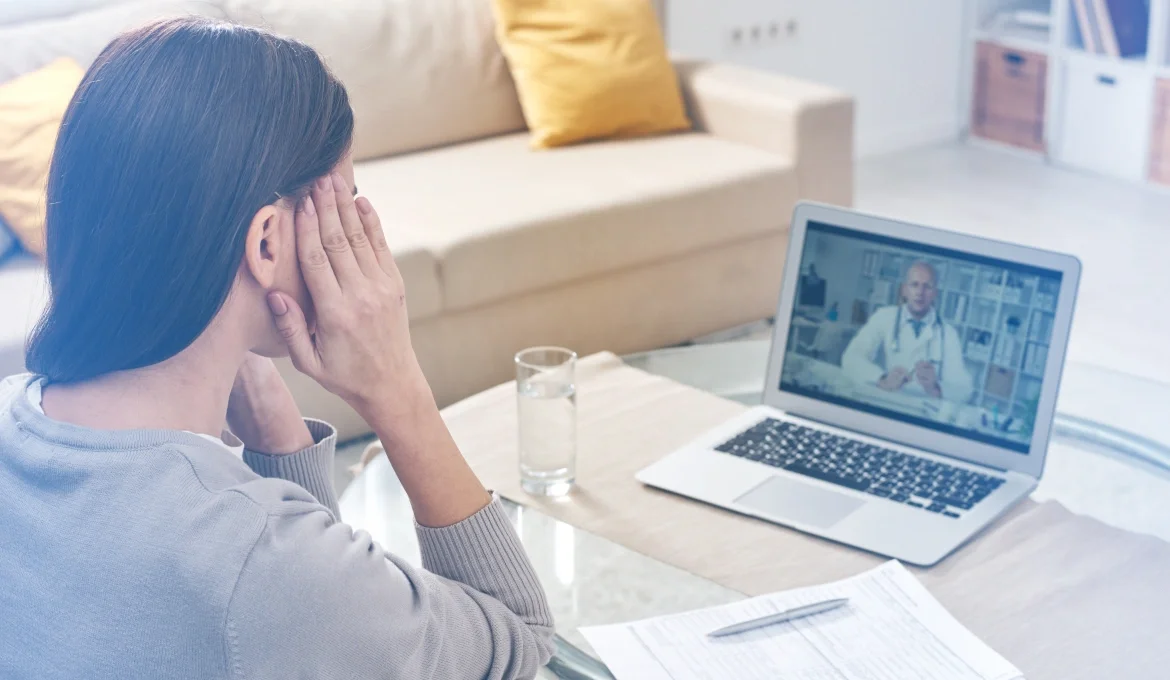
Guide to Telehealth for Anxiety in Australia
Tele-Counselling: A Proven Approach
Let’s start with tele-counselling. It is one of the most established approaches, and some providers offer it fully bulk-billed, for example, Hola Health and Abby Health. Online counselling also shows similar effectiveness to in-person therapy [1]. Often, it is based on Cognitive Behavioural Therapy (CBT), which can be particularly helpful for anxiety.
Given that it is accessible via a free mental health treatment plan, it is also affordable and convenient. You can find providers for the initial free assessment, as well as a list of the highest-rated tele-counselling providers, on our Mental Health page. There are also free services like MindSpot that offer free online CBT programs. Worth checking out, if you are motivated to get started straight away.
Mindfulness Apps and Online Programs: Accessible Stress Management
Mindfulness apps or self-led online programs offer a low-key and low-commitment approach to handling stress and anxiety. Guided meditation and exercises can help you lower stress levels and improve your overall sense of well-being. Over time, they can help you create new habits and build resilience [2] or at least create a little more space for feeling calm and being present in your life.
Granted, they may not be the answer for severe anxiety, but in mild and moderate cases, they can be just what the doctor ordered. Some apps, like Smiling Mind, are free, others, like Calm and Headspace have affordable subscription models. Programs also vary, from Sleep Ninja to Brave. Pricewise, they’ll beat all other options, unless you are eligible for fully bulk-billed counselling and can find a provider without a gap fee.
Medicinal Cannabis is the most expensive option with the most significant risks of side effects. It should only be considered for chronic anxiety after careful evaluation of your medical history, and if you have proven unresponsive to other treatments. While it can be a good option for some patients, there are other prescription-based options available that have been studied more extensively.
While it is widely available online, it is best discussed in-depth with your primary care provider. Importantly, you should also choose a high-quality telehealth provider to deliver the treatment. Single-issue providers with CBD as a business model are more likely to prescribe without due diligence, at a higher dose and in cases where other options may be more suitable.
If you want to discuss your options with a reputable GP through a high-quality telehealth provider, I recommend using MediCompare’s tools and reviews to find your best option.
Choosing the Right Option
Of course, finding the right option for you depends on your specific needs. Suppose you are suffering from chronic or high levels of anxiety. In that case, tele-counselling is likely the most effective, evidence-based solution for you, especially through a bulk-billed mental health treatment plan. Mindfulness apps may be an affordable and easily accessible add-on or help you if you are suffering from temporary high levels of stress or mild anxiety. Medicinal cannabis should be considered a last resort option and ideally carefully weighed up together with a specialist treating chronic conditions.
Other options include prescription-based approaches and alternative lifestyle change consultations, for example, by focusing on gut health and exercise to lower stress levels and improve your overall health.
Additional Support and Resources
There are plenty of other online mental health services available in Australia, offering free or low-cost support for those in crisis or living in rural areas [1]. They often offer immediate, anonymous assistance. While they are no replacement for face-to-face counselling and lack the continuity of care available via dedicated tele-counselling or in-person counselling, they are a good starting point. If you need immediate help, call Lifeline (13 11 14) or Beyond Blue (1300 22 4636) for 24/7 support. (Or chat online.)
Disclaimer
This article is for informational purposes only and is no substitute for professional medical advice. Please choose your provider with care. Always consult your doctor or a qualified health professional regarding any health-related questions or concerns.