
BMI, Weight Loss and Medical History: What Online Providers Look At

anna-faulkner
By: Anna Faulkner
Blog
Medicompare - BMI and Medical History

BMI, Weight Loss and Medical History: What Online Providers Look At

What is Body Mass Index (BMI)?

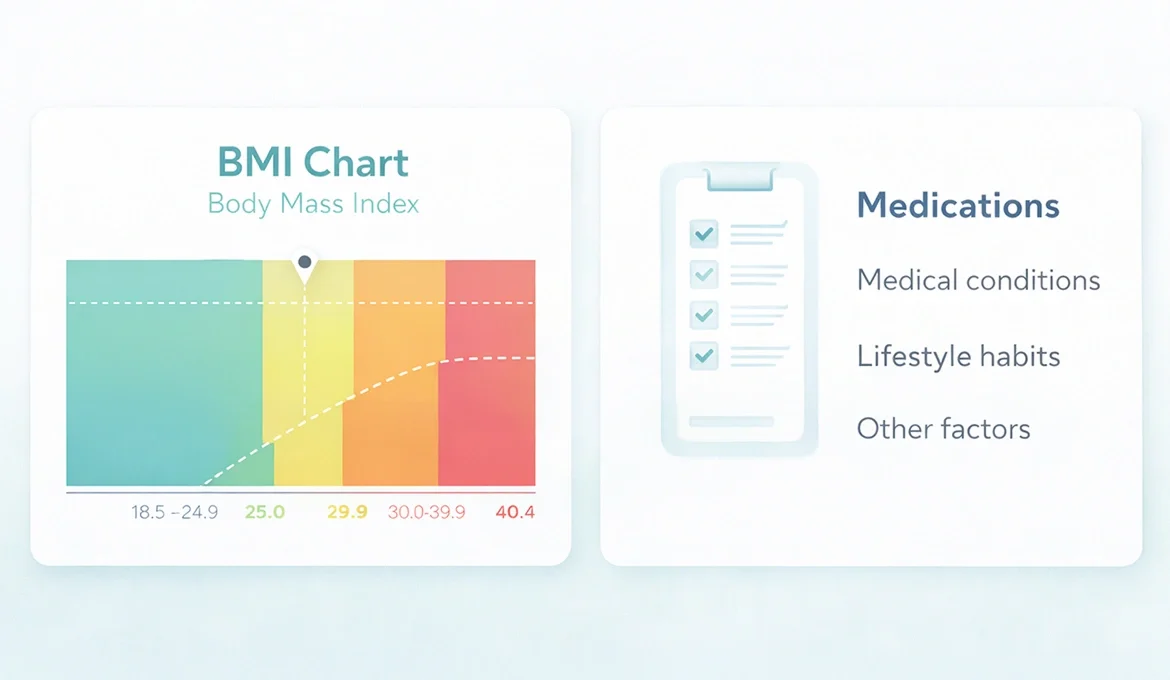
BMI is a quick way to calculate your weight to height ratio and, with it, potential risks to your health. The Australian Department of Health [1] has made BMI part of its initial health screen for access to medicated weight loss solutions, as high BMI and waist size are linked to greater risk of type 2 diabetes, heart disease, hypertension, and some cancers.

It’s not a perfect measure, as it doesn’t differentiate muscle from fat and is seen in the context of your medical history and other health markers. If you’re wondering, “Why do we use BMI as a measure,” it’s because it gives your doctor a baseline to decide on the best treatment and also provides legal access to medicated weight loss solutions.

Why is BMI important for weight loss via telehealth?

Online weight loss providers, such as Healthy Life, use BMI and waist size as tools to check which weight loss interventions are appropriate for you. They may start their weight loss programmes with an online questionnaire to check which BMI category you fall into: A BMI of 25–29.9 falls into the overweight category and a BMI of ≥30 obese.

When your BMI is above 25, this may prompt extra questions about both your lifestyle and medical history, for example, diet, activity level, previous weight loss attempts, and any risk factors. While all weight loss plans are required to include a lifestyle focus to help you change your habits for sustainable long-term weight loss, a patient with a BMI above 27 may benefit from weight loss medication.

How providers use your medical history

When you register for a weight loss telehealth consult, you’ll typically have to fill in an intake form – sometimes this is done though an AI guided process like at Abby Health. Usually, questions cover previous weight loss attempts, your current lifestyle, chronic conditions, current medications and recent surgeries or injuries. This is because all of these factors can affect your ability to lose weight and safety when trying medicated weight loss.

Some medications can affect your appetite or metabolism, determining your likely success with a weight loss programme, and surgeries and injuries may stop you from getting the necessary amount of physical exercise, or drop your physical activity level in general. Chronic conditions, like diabetes, hypertension, and thyroid disorders, may also be used to evaluate your eligibility for weight loss medication.

Providing this information will help the consulting doctor advise you and tailor an appropriate and safe weight loss treatment plan. The telehealth provider may also offer ongoing support in the form of nutritionists or lifestyle change advice, like for example Updoc. Some telehealth providers also offer a mix of in-person assistance, for example through weight loss surgery, supported by an online component, giving you round-the-clock support on your weight loss journey.

TGA requirements for BMI and weight loss medication

In Australia, the Therapeutic Goods Administration (TGA) [2] has set out the following guidelines on the prescription of weight loss medicines: Weight loss medications such Wegovy (semaglutide), Saxenda (liraglutide), Mounjaro (tirzepatide), Contrave (naltrexone/bupropion), Xenical (orlistat), and Duromine (phentermine) supported by the TGA to help patients at risk of chronic conditions when the following is met: 

  • BMI ≥ 30 kg/m², or
  • BMI ≥ 27 kg/m² plus at least one obesityrelated comorbidity (e.g., type 2 diabetes, obstructive sleep apnoea, dyslipidaemia).

It’s important for patients to know that these are legal guidelines for prescribing doctors. It is also not allowed to advertise weight loss medication. If a service breaches the TGA guidelines, they are unlikely to follow ethical business practices, and you may be best advised to steer clear.

How can I check my BMI online?

High BMI is a serious risk to your health. Services like The Heart Foundation have made it easy to calculate your BMI online [3]. They also educate patients on additional risk factors such as blood pressure and cholesterol. As BMI is just one measure, you should also check your waist size and see a GP to have your blood pressure and cholesterol checked. Together, this will help you estimate your risk of a heart attack or stroke.

Some telehealth providers may provide the same BMI calculator tools during their intake process, helping you get a better picture of your overall health.

Summary

If you are looking to use a telehealth provider to help you with your weight loss journey, you’ll likely be asked to provide your BMI and other information. You can find the most suitable solution for you by checking MediCompare’s in-depth provider reviews or comparison tools.

Keeping an eye on your BMI and knowing what options are available to you can help you make better choices, for example by knowing to look out for telehealth providers following the TGA’s guidelines and offering comprehensive weight loss support, not just access to medication. (It is illegal for providers to advertise weight loss drugs.)

Disclaimer

This article is for informational purposes only and is no substitute for professional medical advice. Please choose your provider with care. Always consult your doctor or a qualified health professional regarding any health-related questions or concerns.