
What to Expect from Telehealth Anxiety Therapy: Sessions, Tools, and Outcomes

What to Expect from Telehealth Anxiety Therapy: Sessions, Tools, and Outcomes
- TL;DR
- Understanding Telehealth Anxiety Therapy in Australia
- What Happens During Telehealth Anxiety Therapy Sessions?
- Tools Commonly Used in Telehealth Anxiety Therapy
- Expected Outcomes from Telehealth Anxiety Therapy
- Telehealth Anxiety Therapy Compared to In-Person Care
- Accessing Telehealth Anxiety Therapy in Australia
- Using Medicompare to Find the Right Telehealth Option
- Disclaimer
Telehealth anxiety therapy is now a well-established part of Australia’s digital healthcare landscape. It allows individuals to access professional mental health support remotely, using secure technology rather than attending in-person clinics. For many Australians, this approach offers greater flexibility, reduced travel time, and improved access to qualified professionals.
This article explains how telehealth anxiety therapy typically works, what happens during sessions, the tools involved, and the outcomes patients may reasonably expect. It is designed for educational purposes and does not provide medical advice or treatment recommendations.
TL;DR
- Telehealth anxiety therapy in Australia provides non-urgent mental health support through video or phone sessions with registered professionals, offering flexibility and improved access.
- Therapy typically involves structured sessions, often starting after a GP consult and referral, sometimes a mental health treatment plan (MHTP), and may include ongoing appointments supported by digital tools and exercises.
- Secure platforms, digital worksheets, and optional self-guided resources are commonly used to support engagement between sessions.
- Outcomes vary, but many individuals experience greater awareness of anxiety patterns, improved coping strategies, and gradual progress over time, with costs and Medicare rebates depending on eligibility and provider policies.
Understanding Telehealth Anxiety Therapy in Australia
Telehealth anxiety therapy involves psychological support delivered via video calls, phone appointments, or secure online platforms. Services are commonly provided by registered psychologists, clinical psychologists, or accredited mental health professionals, such as counsellors.
In Australia, telehealth therapy is often accessed through a mental health care pathway, which may involve an initial GP consult. Depending on eligibility and provider policies, some services may offer bulk-billed sessions, while others charge a private fee.
Telehealth services are intended for non-urgent support and ongoing care, not for crisis or emergency situations.
What Happens During Telehealth Anxiety Therapy Sessions?
Initial Sessions and Information Gathering
The first appointment typically focuses on understanding the individual’s concerns, personal circumstances, and therapy goals. The therapist may ask structured questions about emotional well-being, stressors, and daily functioning to determine whether telehealth therapy is appropriate.
When accessing services under Medicare-supported pathways, this stage often follows a GP referral or mental health care plan.
Ongoing Session Structure
Subsequent sessions usually follow a consistent format, delivered weekly or fortnightly depending on care plans and availability. Sessions generally last 30-60 minutes and may include reviewing recent experiences, discussing emotional patterns, exploring coping strategies, and setting goals for the next session.
Telehealth sessions aim to closely mirror in-person therapy while allowing patients to participate from a familiar environment.
Tools Commonly Used in Telehealth Anxiety Therapy
Most telehealth providers use encrypted systems that meet Australian privacy and data protection standards. These platforms typically support video consultations, appointment scheduling, and secure document sharing.
Patients are usually encouraged to attend sessions from a private, quiet space to maintain confidentiality and session quality.
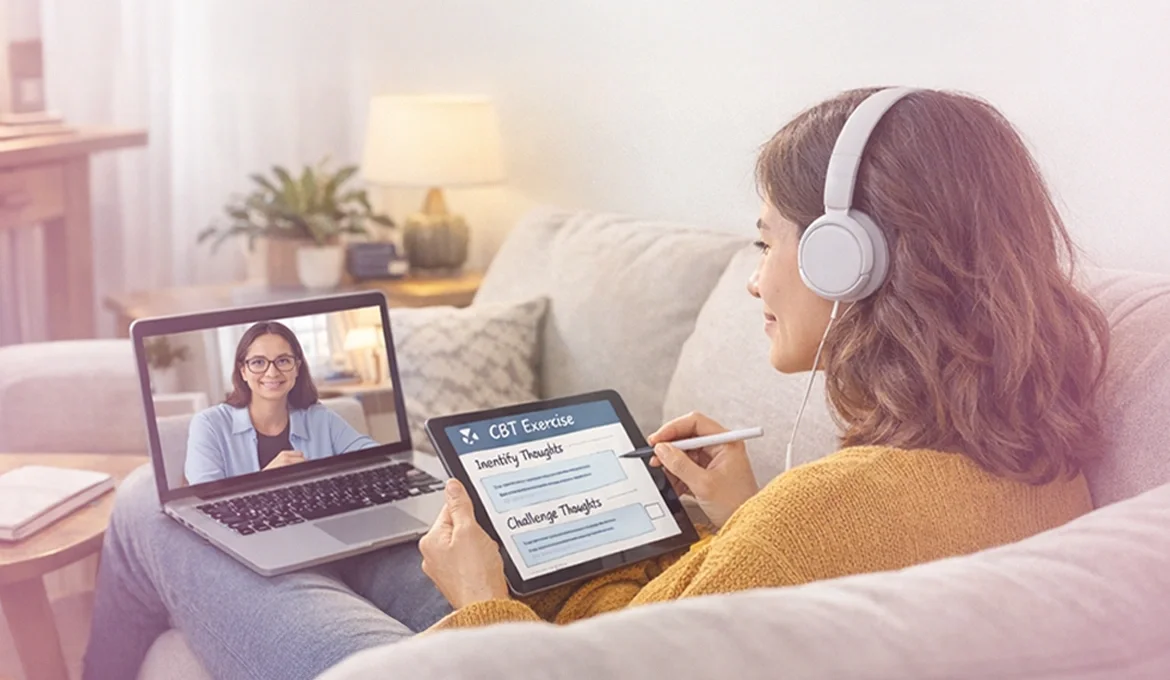
Digital Worksheets and Therapy Exercises
Therapists may provide digital worksheets, guided reflections, or structured exercises to support therapy between sessions. These resources help reinforce session discussions and encourage continued engagement outside scheduled appointments.
Some platforms integrate these tools into patient portals for easier access and progress tracking.
Optional Self-Guided Resources
Certain services also offer optional self-guided programs alongside live therapy. These may include educational modules or structured activities focused on emotional awareness and stress management. While not a replacement for professional sessions, they can complement ongoing therapy.
Expected Outcomes from Telehealth Anxiety Therapy
Short-Term Outcomes
In the early stages, many patients report increased awareness of anxiety patterns and triggers. This understanding can support better emotional insight and improved communication about mental health concerns.
Consistency and engagement are key factors influencing early outcomes.
Medium to Long-Term Outcomes
With ongoing participation, individuals may develop more effective coping strategies, improved emotional regulation, and greater confidence in managing stress. Outcomes vary depending on individual circumstances, session frequency, and therapeutic alignment.
Telehealth therapy is generally designed to support gradual progress rather than immediate results.
Telehealth Anxiety Therapy Compared to In-Person Care
For many non-urgent anxiety concerns, telehealth therapy can offer comparable support to face-to-face sessions, though without the co-regulation available through attending face-to-face counselling. The main difference lies in how care is delivered, not in the therapeutic intent.
Potential advantages include flexible scheduling, reduced travel, and improved access for people in regional or remote areas. However, telehealth may not be suitable for individuals requiring intensive or crisis-level care.
Accessing Telehealth Anxiety Therapy in Australia
Many Australians begin telehealth therapy with a GP consult, particularly when seeking Medicare rebates under a Mental Health Treatment Plan. Costs, rebates, and session limits vary by provider and should be confirmed in advance.
Some platforms advertise bulk-billed options for eligible patients, while others operate privately.
Using Medicompare to Find the Right Telehealth Option
When searching for the right telehealth provider for you, MediCompare helps by offering in-depth platform reviews and comparison tools. This allows you to check user reviews, qualifications, service models, availability, and pricing. It makes it easy to compare telehealth services across categories such as mental health, GP consultations, weight loss and more, all in the one place. The aim is to empower you to make informed decisions without promoting a single provider.
Disclaimer
This article is provided for general informational purposes only and is not intended as medical advice, diagnosis, or treatment. Telehealth anxiety therapy services, eligibility, costs, and outcomes may vary between providers and individual circumstances. Readers should consult a qualified healthcare professional or their GP for personalised medical guidance. For urgent mental health concerns or emergencies, contact local emergency services or appropriate crisis support services.