

Anxiety disorders are among the most common mental health conditions in Australia, affecting millions of people each year. Fortunately, there are several well-researched, evidence-based treatments that have proven effective in helping individuals manage and overcome anxiety. Understanding these treatment options can empower Australians to make informed decisions about their mental health care. This guide explores the most effective approaches to anxiety treatment and how to access them, including through convenient telehealth services.
Best Evidence-Based Treatments for Anxiety: A Comprehensive Guide
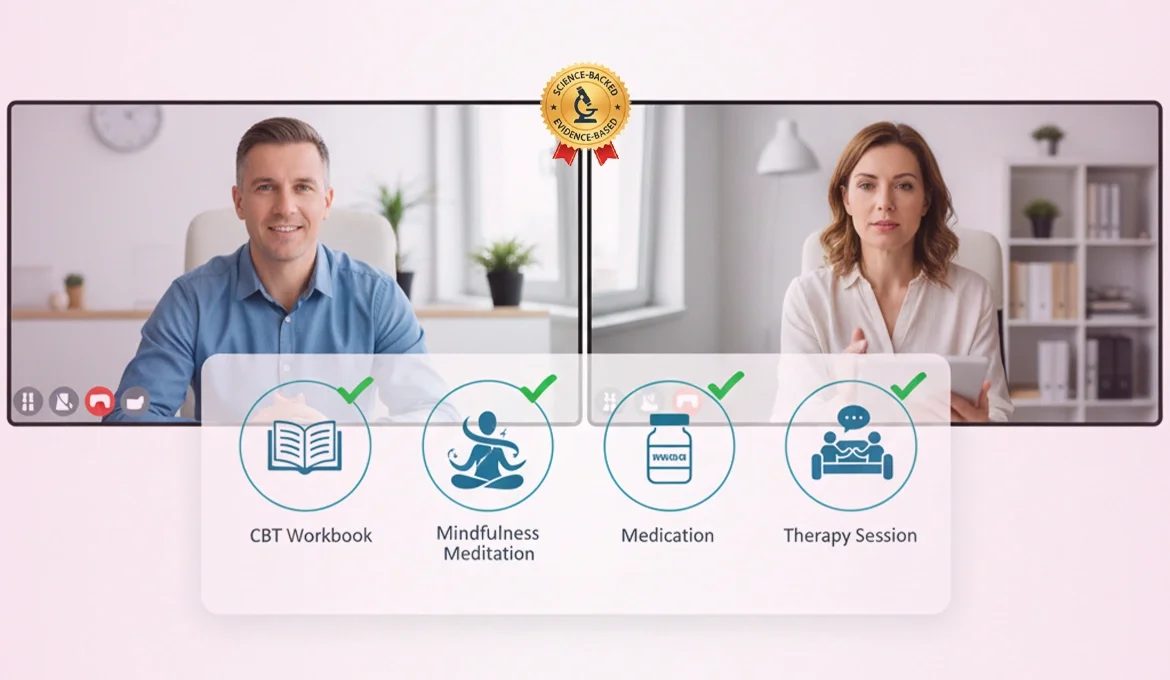
Best Evidence-Based Treatments for Anxiety: A Comprehensive Guide
- What Are Evidence-Based Treatments?
- Psychological Treatments for Anxiety
- Medication Options for Anxiety
- Combining Therapy and Medication
- Accessing Evidence-Based Treatments Through Telehealth
- Lifestyle Factors That Support Anxiety Treatment
- Finding the Right Treatment for You
- Taking the First Step
- Disclaimer
What Are Evidence-Based Treatments?
Evidence-based treatments are therapeutic approaches that have been rigorously tested through scientific research and clinical trials. These treatments have demonstrated consistent, measurable results in reducing anxiety symptoms and improving quality of life. Unlike unproven or experimental methods, evidence-based treatments are supported by peer-reviewed studies and endorsed by leading mental health organisations.
When seeking help for anxiety, choosing an evidence-based approach increases the likelihood of positive outcomes. Mental health professionals, including counsellors, psychologists and psychiatrists, are trained to deliver these treatments and can tailor them to each individual's unique needs and circumstances.
Psychological Treatments for Anxiety
Cognitive Behavioural Therapy
Cognitive Behavioural Therapy, commonly known as CBT, is widely regarded as the gold standard treatment for anxiety disorders. This structured, goal-oriented therapy focuses on identifying and changing unhelpful thought patterns and behaviours that contribute to anxiety.
During CBT sessions, a counsellor or psychologist helps patients recognise unhelpful thinking patterns, such as catastrophising or overgeneralising, and develop more balanced perspectives. Patients also learn practical coping strategies to break through patterns and modify their unhelpful behaviours. This may also involve engaging in behavioural experiments to test and face their fears in real-world situations, learning to change not just the way they think about situations but also how they respond. Essentially, CBT works as a collaborative approach, where the patient learns to become their own therapist and evaluate and address unhelpful thoughts and behaviours.
Research consistently shows that CBT can produce significant improvements in anxiety symptoms, with benefits often maintained long after treatment ends. CBT is effective for various anxiety disorders, including generalised anxiety disorder, social anxiety, panic disorder, and specific phobias.
Acceptance and Commitment Therapy
Acceptance and Commitment Therapy, or ACT, is a newer form of psychological treatment that has gained strong research support for anxiety. Rather than trying to eliminate anxious thoughts, ACT teaches patients to accept uncomfortable feelings, become more present and take action aligned with their personal values.
ACT incorporates mindfulness techniques to help individuals observe their thoughts without judgment and reduce the struggle against anxiety. By focusing on what matters most to them, patients can live meaningful lives even when anxiety is present.
This approach can be particularly helpful for individuals suffering from an underlying anxiety-inducing condition, such as cancer, or those who have not responded well to other therapies, including medication. It is best suited for teenagers and adults, as abstract thinking skills are required.
Exposure Therapy
Exposure therapy is CBT-based and a highly effective treatment for patients with anxiety disorders, particularly phobias, veterans experiencing PTSD, and children exposed to traumatic events. This approach involves gradually and systematically confronting feared situations, objects, or thoughts in a safe and controlled manner.
Through exploring their thoughts around their fears and repeated exposure, patients gradually learn that their feared outcomes are unlikely to occur or that they can cope with anxiety more effectively than they believed, including through newly learned strategies. Over time, the anxiety response diminishes, and avoidance behaviours decrease.
Exposure therapy can be conducted in various formats, including imagined exposure, where patients visualise feared scenarios, simulated exposure, real-life exposure and prolonged exposure. A trained psychologist guides the process to ensure it is conducted safely and at an appropriate pace. They provide coping tools and strategies to help the patient lower their response.
Mindfulness-Based Therapies
Mindfulness-based approaches, such as Mindfulness-Based Stress Reduction and Mindfulness-Based Cognitive Therapy, have demonstrated effectiveness for anxiety management. These therapies teach patients to focus on the present moment, observe their thoughts and feelings without judgment, and cultivate a sense of calm.
Regular mindfulness practice can reduce the tendency to ruminate on worries and help individuals respond to stressors more adaptively. Mindfulness-based therapies are often used alongside other treatments, such as CBT, to enhance overall outcomes.
Interpersonal Therapy
Interpersonal Therapy, or IPT, focuses on improving communication patterns and relationships, often in a time-limited approach. While originally developed for depression, IPT has shown promise for certain anxiety presentations, particularly where interpersonal difficulties play a significant role.
It addresses anxiety by resolving interpersonal conflicts, role transitions, or grief. It is effective for social anxiety and generalised anxiety, often combined with medication for better outcomes.
During IPT sessions, patients explore how their relationships and social interactions affect their mental health and develop strategies for more effective communication and conflict resolution.
Medication Options for Anxiety
Antidepressants
Certain antidepressant medications are commonly prescribed for anxiety disorders, even in the absence of depression. Selective serotonin reuptake inhibitors, known as SSRIs, and serotonin-norepinephrine reuptake inhibitors, known as SNRIs, are often first-line pharmacological treatments for anxiety.
These medications are thought to work by increasing neurotransmitters like serotonin and noradrenaline. These are chemicals in the brain which can improve mood and emotion. But this process isn’t fully understood.
Antidepressants can help regulate mood and reduce anxiety symptoms. It may take several weeks for the full effects to become apparent, and dosage adjustments may be needed to find the optimal level for each individual.
Antidepressants are typically prescribed by a GP or psychiatrist and require ongoing monitoring to assess effectiveness and manage any side effects.
Benzodiazepines
Benzodiazepines are a class of medication that make your nervous system less active, which can provide rapid relief from acute anxiety symptoms. However, due to the risk of dependence and other side effects, they are generally recommended only for short-term use or specific situations.
These medications are not considered a first-line treatment for ongoing anxiety management. A healthcare professional can discuss whether benzodiazepines might be appropriate for your circumstances and outline the associated risks.
Beta-Blockers
Beta-blockers are sometimes used off-label to manage the short-term physical symptoms of anxiety, such as rapid heartbeat, trembling, and sweating. Off-label use means they are not a primary treatment. While they do not address the psychological aspects of anxiety, they can be helpful for situational anxiety, such as performance anxiety or public speaking.
Beta-blockers are sometimes prescribed off-label by a doctor and are typically used on an as-needed basis rather than as a daily treatment, where other treatments have failed or are inappropriate.
Consulting a Professional About Medication
Decisions about medication should always be made in consultation with a qualified healthcare professional. A GP can provide initial guidance and prescribe certain medications, while a psychiatrist offers specialist expertise for more complex cases or when first-line treatments have not been effective.
For those seeking convenient access to medical consultations, a GP consult can be completed online through telehealth platforms such as Abby Health, Our Sage and Prime Medic. These services connect patients with Australian-registered doctors who can discuss treatment options and provide prescriptions when appropriate.
If a prescription is issued, digital prescription delivery services such as Hola Meds, Medmate, and Evermed offer convenient ways to receive your medication.
Combining Therapy and Medication
For many individuals, a combination of psychological therapy and medication produces the best outcomes. Research suggests that combining CBT with antidepressant medication can be more effective than either treatment alone, particularly for moderate to severe anxiety.
The decision to combine treatments depends on factors such as the severity of symptoms, individual preferences, and response to initial interventions. A mental health professional can help determine the most appropriate treatment plan for your situation.
It is important to note that medication is not always necessary, and many people achieve significant improvement through therapy alone. Discussing your options with a qualified practitioner ensures you receive personalised advice.
Accessing Evidence-Based Treatments Through Telehealth
Online Psychology Services
Telehealth has made it easier than ever to access evidence-based psychological treatments for anxiety. Online psychology sessions allow patients to receive CBT, ACT, exposure therapy, and other therapies from the comfort of their homes.
To access Medicare rebates for psychology sessions, patients typically need a Mental Health Treatment Plan from a GP. This plan can be obtained through an online consultation, streamlining the process of accessing care.
Medicompare is a valuable resource for comparing telehealth platforms and finding providers that offer mental health services. Platforms like GP2U connect patients with Australian-registered psychologists who deliver evidence-based treatments via secure video consultations.
Online Psychiatry Services
For individuals who may benefit from medication or specialist psychiatric input, online psychiatrist consultations provide convenient access to expert care. Psychiatrists can diagnose anxiety disorders, prescribe medication, and oversee complex treatment plans.
A referral from a GP is required to access Medicare rebates for psychiatry services. Telehealth platforms such as Qoctor and NextClinic can assist with obtaining referrals and connecting with specialists.
Benefits of Telehealth for Anxiety Treatment
Telehealth offers several advantages for individuals seeking anxiety treatment:
Convenience of attending appointments from home. Reduced travel time and associated stress. Greater access to specialists, regardless of location. Flexible scheduling, including evenings and weekends. Privacy and comfort of a familiar environment.
For those who find in-person appointments challenging due to anxiety symptoms, telehealth can provide a more accessible entry point to care.
Lifestyle Factors That Support Anxiety Treatment
While professional treatment is essential for managing anxiety, certain lifestyle factors can complement evidence-based therapies and enhance overall outcomes.
Regular Physical Activity
Exercise has been shown to reduce anxiety symptoms by releasing endorphins, improving sleep, and providing a healthy outlet for stress. Even moderate activities, such as walking or swimming, can have a positive impact on mental well-being.
Sleep Hygiene
Poor sleep can exacerbate anxiety, creating a cycle that is difficult to break. Practising good sleep hygiene, such as maintaining a consistent sleep schedule, limiting screen time before bed, and creating a restful environment, can support better mental health.
Nutrition and Hydration
A balanced diet and adequate hydration contribute to overall physical and mental health. Reducing caffeine and alcohol intake may also help manage anxiety symptoms, as these substances can trigger or worsen anxious feelings in some individuals.
Social Support
Connecting with friends, family, or support groups can provide emotional comfort and reduce feelings of isolation. Sharing experiences with others who understand can be an important part of the recovery journey.
Finding the Right Treatment for You
Every individual's experience with anxiety is unique, and what works for one person may not be the best fit for another. Working with a qualified mental health professional ensures you receive a thorough assessment and a treatment plan tailored to your specific needs.
If you are unsure where to start, consulting a GP is a practical first step. They can provide guidance, create a Mental Health Treatment Plan, and refer you to appropriate specialists if needed. For those seeking affordable options, some telehealth platforms offer bulk billed consultations, making professional support more accessible.
Platforms like Private Medical and Updoc provide a range of telehealth services that can support your journey toward better mental health.
Taking the First Step
Seeking help for anxiety is a positive and courageous step toward improved well-being. With a range of evidence-based treatments available via telehealth, it is easier to take action, especially if your anxiety is holding you back. Telehealth minimises the initial effort required and takes out some factors that may stop you from seeking help or continuing care. It can make a real difference by removing hurdles. Whether through therapy, medication, or a combination of both, professional support via telehealth can help you manage anxiety and live a more fulfilling life.
Disclaimer
The content created is intended for informational purposes only. It does not provide medical advice, diagnoses, or treatment. Always consult a healthcare professional for personal medical advice or treatment.