
Why Most On-Demand Telehealth Services Don’t Accept Medicare in Australia

Why Most On-Demand Telehealth Services Don’t Accept Medicare in Australia
- Medicare’s Existing Relationship Rule
- Why On-Demand Telehealth Services Don’t Qualify for Medicare Rebates
- Consultation Structure and Medicare Billing Requirements
- Medicare's Focus on Continuity of Care
- Limited Exceptions to Medicare Telehealth Rules
- Why Most On-Demand Telehealth Platforms Use Private Billing
- Summary
This guide was created in collaboration with Richard Skimmin, Telemedicine Leader, Ex-CEO of InstantScripts, and former Managing Director at News Corp. Drawing on years of experience in digital health, Richard helped us shape clear, practical insights to answer common questions about Medicare and on-demand telehealth services in Australia.
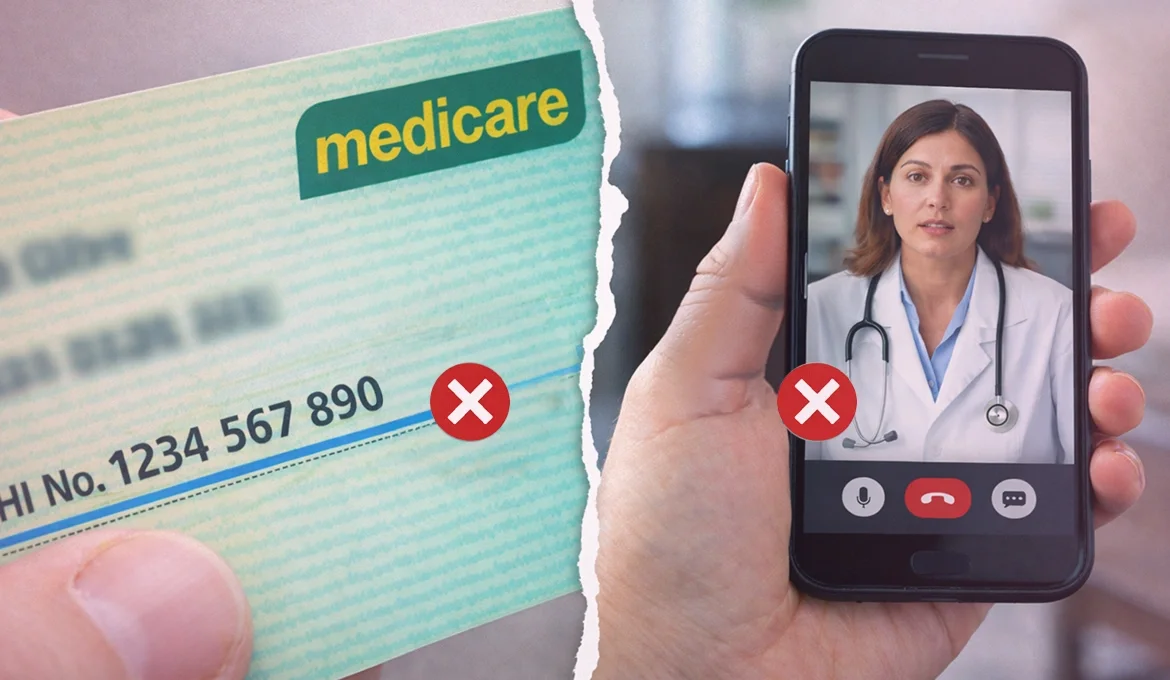
On-demand telehealth has become one of the fastest-growing areas of digital healthcare in Australia. Platforms listed on comparison sites such as MediCompare offer quick access to online doctors for prescriptions, medical certificates, general consultations and follow-up care. However, Medicare rebates apply only in specific circumstances, and most on-demand telehealth services do not meet the requirements for Medicare billing.
Medicare’s Existing Relationship Rule
The main reason lies in Medicare’s Existing Relationship Rule, which is designed to support continuity and safety of care. Medicare rebates for GP telehealth consultations are generally only available when a patient has an established clinical relationship with the doctor or practice. This means the patient must have seen the same GP, or another GP at the same practice, face to face within the previous 12 months. The rule is intended to ensure the doctor has access to a patient’s medical history when making clinical decisions.
Why On-Demand Telehealth Services Don’t Qualify for Medicare Rebates
Most on-demand telehealth platforms do not meet this requirement. These services typically connect patients with the next available doctor rather than a regular GP. Because patients are not required to have previously attended a physical clinic, the Existing Relationship Rule cannot be met. As a result, Medicare rebates do not apply to the majority of consultations delivered through on-demand platforms.
Consultation Structure and Medicare Billing Requirements
Another reason Medicare does not cover most on-demand telehealth services relates to the type of consultations provided. Many platforms focus on short consultations, prescription renewals or issuing medical certificates. Medicare telehealth item numbers require an appropriate clinical assessment comparable to a traditional GP consultation. Short or transactional consultations do not meet Medicare’s assessment requirements. Even when longer consultations are available, the structure of on-demand services makes Medicare compliance difficult to maintain.
Medicare's Focus on Continuity of Care
Medicare’s telehealth framework prioritises long-term GP–patient relationships rather than episodic, one-off appointments. Following reforms introduced after the COVID-19 period, Medicare policy has increasingly focused on reducing fragmented care and strengthening oversight of ongoing health conditions. On-demand telehealth services, by contrast, prioritise speed, accessibility and national coverage. They do not usually guarantee access to the same doctor for follow-up visits or position themselves as a patient’s regular GP, placing them outside Medicare’s continuity-of-care objectives.
Limited Exceptions to Medicare Telehealth Rules
Medicare does allow limited exceptions to the 12-month Existing Relationship Rule. These apply to specific groups, including babies under 12 months of age, residents of aged care facilities, people experiencing homelessness and individuals living in disability accommodation. These exemptions are intended to support people who may face barriers to in-person care. For most Australians using on-demand telehealth for prescriptions, medical certificates or general advice, Medicare rebates cannot be claimed.
Why Most On-Demand Telehealth Platforms Use Private Billing
The structure of on-demand telehealth businesses also influences their billing approach. Medicare item numbers require detailed clinical documentation and strict compliance obligations. On-demand services are designed around speed, convenience and digital automation. Private billing allows these platforms to operate nationally without Medicare’s continuity-of-care restrictions while offering flexible consultation formats suited to lower-acuity medical needs. For this reason, many online doctor platforms choose private fees even if theoretically capable of meeting certain Medicare requirements.
Summary
In summary, most on-demand telehealth services listed on MediCompare do not accept Medicare because their care model does not align with Medicare’s continuity-of-care rules, the 12-month Existing Relationship Rule or the clinical standards required for MBS telehealth billing. Their rapid, national, instant-access model prioritizes convenience over traditional GP continuity, making private billing the most viable option under current Medicare rules.
Editorial note: This article was developed with expert input to ensure accuracy and clarity around Medicare telehealth rules. Medicompare regularly works with industry leaders to help readers make informed decisions about digital healthcare services.